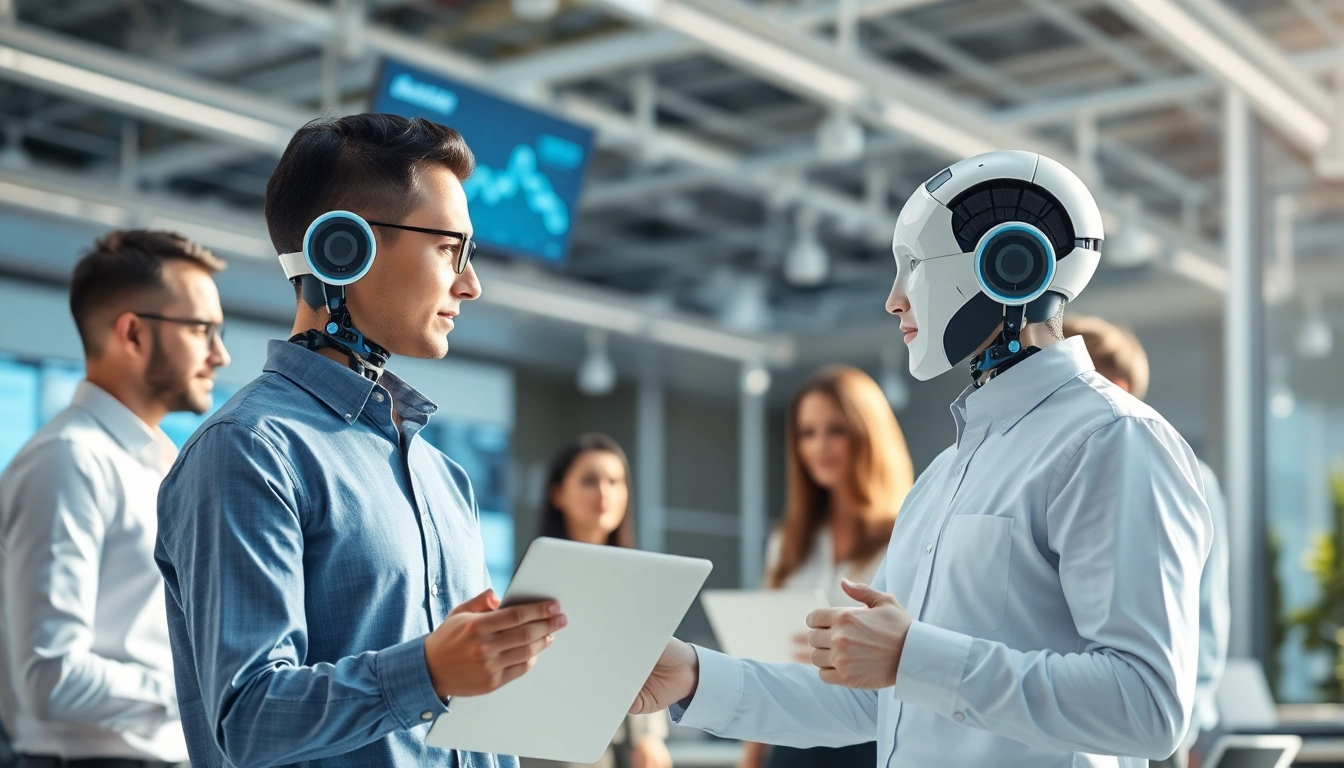
Introduction to AI Employee
The integration of AI in the workplace is reshaping the landscape of employment, with the emergence of what are known as AI Employees. Unlike traditional workers, these intelligent software agents are designed to perform specific tasks that aide human employees. This article delves into the concept of AI Employee and the transformative role it plays in modern organizations, enhancing productivity and efficiency in various sectors. By understanding the potential of AI Employees, businesses can leverage these tools to optimize their operations and drive innovation. For more insights into this growing trend, explore the AI Employee phenomenon.
Defining the AI Employee
An AI Employee refers to software systems capable of executing tasks typically associated with human workers. These virtual entities utilize machine learning, natural language processing, and other advanced technologies to perform a wide range of functions, such as data entry, customer service, and basic decision-making processes. Through self-learning capabilities, AI Employees can adapt to new information and scenarios, allowing them to enhance their effectiveness over time.
The Evolution of AI in the Workplace
The journey of AI in the workplace has evolved tremendously over the past few decades. Initially relegated to mundane data processing tasks, AI systems have matured into sophisticated entities that can conduct nuanced analyses, understand contexts, and interact with users in human-like manners. This evolution has been driven by advancements in technology, increased computational power, and the growing necessity for businesses to streamline operations. As a result, the adoption of AI Employees has steadily increased, leading to more agile and resilient organizations.
Understanding the Benefits
Organizations that integrate AI Employees stand to gain numerous benefits. Key advantages include:
- Increased Efficiency: AI Employees operate continuously without the need for breaks, allowing for tasks to be completed faster and at scale.
- Cost Savings: Automation through AI Employees reduces labor costs and minimizes human error, leading to significant financial savings.
- Enhanced Data Insights: With their ability to process vast amounts of information, AI Employees can identify patterns and provide valuable insights that drive informed decision-making.
- Improved Customer Experience: AI Employees can interact with customers around the clock, improving response times and satisfaction rates.
Core Functions of an AI Employee
Task Automation
AI Employees excel in automating repetitive and time-consuming tasks that free human employees to focus on higher-value activities. Functions like data entry, scheduling, and inventory management can be seamlessly managed by AI systems, significantly improving operational efficiency.
Data Processing and Analysis
Another essential function of AI Employees is their ability to process and analyze large datasets rapidly. This capability enables organizations to derive actionable insights and make data-driven decisions, a crucial advantage in today's competitive landscape. AI Employees can identify trends that might go unnoticed by human analysts, providing companies with an edge in strategic planning.
Customer Interaction
AI Employees are also employed in customer service roles, facilitating interactions via chatbots or voice assistants. These systems are designed to understand customer queries, provide instant responses, and escalate more complex issues to human agents when necessary. This hybrid approach to customer service ensures that organizations can manage higher volumes of inquiries while maintaining quality and responsiveness.
Implementation Strategies for AI Employees
Assessing Organizational Readiness
Before deploying AI Employees, it is imperative that organizations assess their readiness for this transition. This involves understanding current workflows, evaluating existing technological infrastructure, and determining the skills required by employees to work alongside AI systems. A thorough readiness assessment can expose potential challenges and lay the groundwork for a smoother implementation process.
Integrating with Existing Workflows
The successful integration of AI Employees into existing business processes requires a strategic approach. Organizations should identify specific areas where AI can add value and develop plans for integrating these technologies into current workflows. This may involve updating software systems, reorganizing teams, and aligning objectives across departments to ensure that everyone is working toward common goals.
Training and Onboarding Employees
Proper training and onboarding are critical in facilitating a smooth transition to an AI-enhanced workplace. Employees need to understand how to effectively collaborate with AI technologies, which may require upskilling efforts and the development of new competencies. Investing in training programs that emphasize the potential of AI and how it can augment human capabilities will foster a collaborative environment and ease resistance to change.
Measuring Productivity and Success
Key Performance Indicators
To gauge the success of AI Employees, organizations must establish clear Key Performance Indicators (KPIs). These metrics could include the time taken to complete specific tasks, the volume of outputs produced, and customer satisfaction scores. Monitoring these KPIs over time enables companies to evaluate the effectiveness of their AI integration and make informed adjustments.
Monitoring Feedback from Human Employees
Considering the perspectives and feedback of human employees is essential in assessing the impact of AI Employees. Engaging staff in discussions about their experiences with AI can uncover insights regarding efficiency improvements and areas needing further attention. Organizations can use this feedback to optimize AI deployment continually.
Adjusting Implementation Based on Metrics
Data-driven decision-making is integral to the ongoing success of AI integration. By consistently analyzing performance metrics and employee feedback, organizations can identify gaps in their AI strategy and make necessary adjustments. This iterative approach helps companies refine their AI usage, ensuring that the technology continually aligns with their operational goals.
Future Trends and Considerations
Advancements in AI Technology
The field of AI is rapidly evolving, with continuous advancements in technology promising to redefine the capabilities of AI Employees. From improved machine learning algorithms to more natural human-computer interactions, businesses that adapt to these innovations will likely experience enhanced performance and efficiency.
Ethical Considerations of AI in the Workforce
As organizations increasingly integrate AI Employees, ethical considerations must be at the forefront of discussions. Issues such as data privacy, bias in AI algorithms, and job displacement should be critically examined. By developing ethical frameworks for AI use, companies can build trust with employees and stakeholders while ensuring responsible technology deployment.
Preparing for Evolving Job Roles
The rise of AI Employees is expected to change job roles significantly within organizations. While some positions may become redundant, new opportunities will arise that complement AI capabilities. Businesses must invest in workforce development to prepare employees for these changing dynamics, equipping them with the skills needed to thrive in an AI-driven world.
FAQs
What is an AI Employee?
An AI Employee is a software agent that can perform tasks traditionally assigned to human workers, enhancing efficiency.
How can AI Employees improve workplace productivity?
AI Employees automate repetitive tasks, allowing human workers to focus on complex problem-solving and innovative tasks.
What sectors benefit most from AI Employees?
AI Employees are particularly beneficial in sectors like customer support, data analysis, and manufacturing.
What challenges come with integrating AI Employees?
Challenges include employee resistance, training requirements, and the need for robust IT infrastructure.
Will AI Employees replace human jobs?
While AI Employees may automate certain tasks, they also create new roles that require human oversight and creativity.